
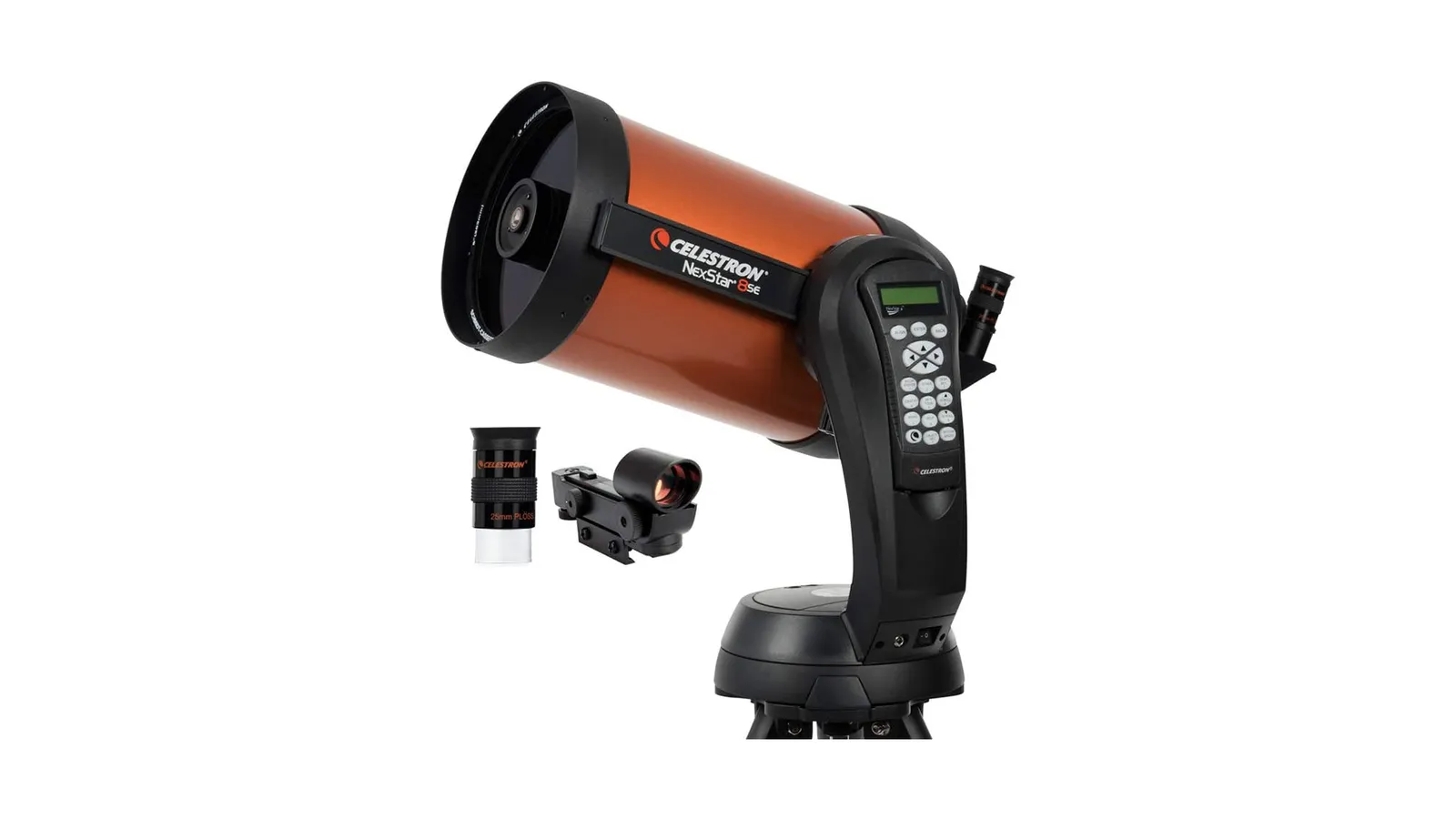
A viral sky photo can make a serious telescope feel like the last ticket to a once-in-a-lifetime show. That is why Celestron NexStar 8SE interest has jumped among U.S. buyers who want more than a toy scope, but do not want a backyard rig that takes over the garage. The appeal is easy to see. You get an 8-inch telescope with computer pointing, a compact orange tube, and enough reach for the Moon, planets, star clusters, and brighter deep-sky targets. Celestron’s own specs list a 203.2 mm aperture, 2032 mm focal length, f/10 optics, and a computerized single fork-arm mount, which explains why this model sits in a higher class than most starter scopes.
The smarter question is not whether the buzz is real. It is whether the scope fits your nights, your yard, and your patience. A good consumer tech and gear news source can point you toward the trend, but your driveway decides whether the purchase pays off. This guide looks past the rush and gives American buyers a grounded way to judge the 8SE before chasing low stock notices, flash deals, or social media hype.
Why Celestron NexStar 8SE Demand Feels Different From Normal Telescope Buzz
Most telescope spikes fade because the product behind them cannot carry the attention. A cheap department-store scope can sell fast after a moon video, then disappoint families on the first cold night. This one has a stronger case because the demand is tied to a real middle ground: enough aperture to feel serious, enough automation to lower the fear, and a body compact enough for a suburban home.
That does not mean everyone should buy in a hurry. The better reading is that people are reacting to a rare mix. They want the deep pull of astronomy without learning the whole sky before their first session. They want a GoTo telescope that can help them find objects, yet still feels like a classic viewing experience instead of a screen-only gadget.
There is another reason the model travels well on social feeds: the results are easy to explain. Nobody has to decode a complicated optical chart to understand an 8-inch mirror path, a bright lunar view, or a motorized mount that moves with a hand controller. The story is simple enough for a reel, but the gear is serious enough for a long ownership life. That combination is rare.
The viral pull is about confidence, not only optics
When a social post shows Saturn cleanly framed or the Moon looking close enough to touch, the viewer does not only see a product. They see permission. Astronomy has a habit of making beginners feel late, underprepared, or embarrassed by basic questions. A computerized telescope changes that emotion.
The 8SE helps because it suggests a path. You align it, choose a target, and let the mount move the tube. Celestron lists SkyAlign and several other alignment options, plus a NexStar+ database with 40,000 objects, so the promise is not vague. It gives a new owner something to do besides guess where to point the tube.
The counterintuitive part is that automation does not remove learning. It often starts learning. Once the mount takes you to Jupiter, you start asking why it rose there, why it drifts, why seeing looks worse over a warm roof, and why the same eyepiece feels different on two nights. The machine gets you to the question sooner.
Why the orange tube keeps showing up in beginner searches
The orange tube matters more than people admit. In a market full of black cylinders and confusing model numbers, this scope looks memorable. That helps online discovery, resale value, and trust. People remember what they saw in a backyard video or on a review page.
The shape also solves a real American storage problem. A long Dobsonian may offer great value, but it can be awkward in an apartment, packed garage, or small SUV. The 8SE optical tube is 432 mm long and the total kit weight is listed at 32 pounds, so it is not pocket-sized, yet it lives in a different space than a large solid-tube reflector.
That is why the buzz has legs. This is not only a telescope for someone with a dark rural field. It can make sense for a homeowner in Ohio, a condo owner in Arizona with a balcony view, or a parent in New Jersey who wants to carry the setup from a hall closet to the patio. The best scope is often the one you take outside.
What Buyers Should Understand Before Paying Rush Prices
Scarcity makes people strange. Add a viral post, a famous brand, and a product with a high normal price, and suddenly careful shoppers start acting like concert-ticket buyers. That is risky with astronomy gear because the first purchase often leads to smaller purchases: power, dew control, filters, a chair, a case, and maybe better eyepieces.
The 8SE deserves respect, but it also deserves calm. Space.com’s 2026 telescope guide describes the model as flexible and suitable across skill levels, while also flagging price as the reason some beginners may step away. That is the honest split. The scope can grow with you, but it can also be too much money for someone who has not yet spent ten clear nights learning what they enjoy.
Treat the sale page like a weather report, not a command. Stock can tighten, then return. Prices can dip, then normalize. A rushed checkout also raises the odds that you forget shipping cost, return policy, warranty handling, or whether the seller is an authorized dealer. Those details sound dull until a mount arrives damaged or a box is missing the hand controller.
An 8-inch telescope rewards patience more than panic
An 8-inch telescope gathers enough light to make the jump from casual moon viewing to more serious observing feel clear. The Moon gains texture. Jupiter becomes more than a bright dot. Saturn can give you the kind of view that makes the whole family go quiet for a second. Under darker skies, brighter nebulae and clusters start to feel less like rumors.
Still, aperture does not beat the atmosphere. A summer night over hot pavement can soften the view. A winter night with steady air can make the same setup feel twice as sharp. That is why buying during a rush should not come with rushed expectations. The scope is capable, but the sky is still the senior partner.
A practical example: a buyer in Dallas may get great lunar views from a driveway but struggle with faint galaxies through city glow. That same owner may drive an hour outside town and suddenly understand why people talk about dark adaptation. The equipment did not change. The sky did.
The GoTo telescope promise still needs a human setup
A GoTo telescope sounds like a shortcut, and in one sense it is. It can point to targets that a beginner would not find by hand. For a parent with one clear hour after dinner, that matters. The shorter path to a view can be the difference between a hobby that sticks and a box that gathers dust.
But the mount needs power, level ground, time, date, location, and alignment stars. The official listing notes that the scope can run on 8 AA batteries or a 12 VDC power source, and that small detail should change how you plan. AA batteries can get you started, but many owners move to a dedicated power tank because motorized tracking drains weak power fast.
The quiet trick is to practice setup in daylight. Put the tripod on the patio. Attach the tube. Learn where the hand controller sits. Balance your movements. The first night should not be the first time your hands touch the bolts. That sounds boring until the Moon is high and your kids are asking why nothing is working.
Where This Scope Fits in a Real American Backyard
Most reviews talk as if observing happens under perfect skies. Most buyers live under porch lights, streetlights, tree lines, roof heat, and neighbors who turn on flood lamps at the worst moment. That is the real test. A scope that can perform only in a desert campsite may not serve the average U.S. household as well as a setup that can earn small wins from a driveway.
The 8SE is best viewed as a strong backyard and travel crossover. It is not the cheapest beginner path. It is not the final word for long-exposure deep-sky imaging. Its sweet spot is visual observing with enough reach to keep the owner curious for years, plus enough computer help to make short sessions feel productive.
That fit matters because the U.S. sky is uneven. A family in rural Maine may have darkness but fight cold and trees. A buyer near Phoenix may have clear nights but heat shimmer rising from hard surfaces. Someone outside Chicago may have good community parks but heavy glow near the horizon. The same telescope can serve each person, but only if the target list and observing spot match the local sky.
Suburban skies change what you should expect
Light pollution does not ruin astronomy. It edits the menu. In a bright suburb, the Moon, Jupiter, Saturn, Mars near opposition, double stars, and some star clusters can still give satisfying sessions. Faint galaxies are a different story. They need darker skies, patient eyes, and honest expectations.
NASA’s skywatching guidance makes a point beginners should hear before spending big: you can start with your eyes alone, and tools are options that add to the experience. That advice matters because a telescope does not create interest from nothing. It amplifies interest that is already there.
Here is the non-obvious buying test: spend a few nights outside before the scope arrives. Learn where south is. Watch how trees block the ecliptic. Notice which neighbor lights hit your yard. You may discover that your best observing spot is not the deck, but a patch near the driveway where the house blocks one streetlight.
A computerized telescope can make short nights count
The average American week is not built around slow hobbies. Work runs late. Kids need rides. Weather breaks at odd hours. A computerized telescope has value because it can turn a narrow viewing window into a real session. You may only have 45 minutes, but 45 minutes with tracking and target selection can be enough.
That matters most for families and new hobbyists. Manual star-hopping is rewarding, but it asks for a mood that life does not always allow. Some nights you want to learn constellations. Other nights you want the mount to find M13 while everyone still has patience.
This is where the 8SE feels modern without becoming a smart telescope. You still look through an eyepiece. You still hear the mount move. You still adjust focus with your hand. The computer serves the night, but it does not replace the feeling of being outside under a sky that refuses to hurry.
Accessories, Storage, and First-Night Habits That Matter
The telescope itself gets the attention, but the small choices around it decide whether the first month feels smooth or irritating. Many buyers focus on magnification and forget comfort, power, moisture, and setup flow. That is backwards. A clear, steady view at moderate power beats a shaky high-power view every time.
Think of the 8SE as a system, not a single object. The mount, tripod, eyepiece, diagonal, finder, hand controller, power source, chair, and sky app all shape the night. The buyer who plans those pieces will get more value than the buyer who spends the whole budget on the tube and hopes the rest works out.
Comfort belongs in that system too. A steady observing chair can improve a session more than a stronger eyepiece because your eye relaxes when your body stops shifting. A small red flashlight, a printed target list, and a towel for moisture may sound plain, but plain gear often keeps people outside longer. That is where the hobby is won.
Start with power, dew control, and one better eyepiece
The least glamorous accessory is often the one that saves the night. Power comes first. A weak battery can make the mount behave badly, and bad mount behavior feels like user error to a beginner. A stable external power source should sit near the top of the list.
Dew control comes next in many parts of the U.S. The Southeast, Midwest, and coastal states can fog glass faster than a new owner expects. A dew shield is not exciting, but it can keep a session alive. In Florida or coastal North Carolina, it may matter more than a fancy filter.
Then think about one eyepiece upgrade, not a whole case. The included 25 mm eyepiece gives a sensible starting point, but a wider-field option can make finding and framing targets feel easier. Resist the kit full of tiny high-power eyepieces. More power is not the same as a better view.
Why first-light success often happens before dark
The best first night begins in the afternoon. Charge the power source. Set up the tripod on firm ground. Check that the finder roughly matches the main tube by aiming at a far daytime object, never the Sun. Read the hand controller menus while the stakes are low.
That last warning is serious. Never point any telescope at the Sun without the correct full-aperture solar filter made for safe solar viewing. A moment of casual aim can cause permanent eye damage. This is not a small-print concern. It is a hard rule.
A simple first-light plan beats a long wish list. Start with the Moon if it is visible. Move to a bright planet if one is up. Try one cluster or double star after that. End while people still feel good. The hobby grows better from a clean first win than from a long night of chasing faint objects through haze.
Conclusion
The rush around this telescope says something useful about where backyard astronomy is heading. People want the real sky, not another app pretending to be the sky. They also want help getting started, because modern life leaves less room for trial and error. That is where Celestron NexStar 8SE earns its attention: it gives serious aperture, guided pointing, and a form that many homes can handle.
Still, the smartest buyer is not the fastest buyer. Check reputable dealers, watch normal price ranges, and be honest about your sky. A viral post can spark interest, but it cannot make your yard darker or your schedule calmer. Buy the scope because you will use it on ordinary Tuesdays, not because strangers made it look magical for ten seconds.
Start with realistic targets, protect your budget for the right accessories, and give yourself a few sessions to learn the rhythm. If the night sky keeps pulling at you after the hype cools, then this orange-tube classic may become less of a purchase and more of a doorway.
Frequently Asked Questions
Is the 8SE a good first serious telescope for beginners?
Yes, it can be a strong first serious scope for beginners who have the budget and patience to learn setup. It is easier than many manual scopes for finding targets, but it still requires alignment, steady power, and realistic expectations about sky conditions.
How much should I expect to spend beyond the telescope?
Plan for extra spending on a reliable power source, dew shield, storage case or padding, and possibly one better eyepiece. The exact amount varies, but saving part of your budget for accessories will prevent frustration during the first few months.
Can this scope show galaxies from a suburban backyard?
Some brighter galaxies may appear, but suburban light pollution will limit faint deep-sky views. The Moon, planets, double stars, and bright clusters are better backyard targets. For galaxies, darker rural skies make a bigger difference than most new accessories.
Is a GoTo mount worth it for casual stargazing?
Yes, especially for people with limited time or little knowledge of the night sky. A GoTo mount helps you find targets faster, keeps objects in view, and makes family sessions easier. Manual learning still matters, but automation can lower the early frustration.
What is the best first target after setup?
The Moon is usually the best first target because it is bright, easy to focus on, and full of detail. Jupiter and Saturn are excellent next choices when they are visible. A bright cluster can follow once alignment feels stable.
Can I use this telescope for astrophotography?
It works well for lunar and planetary imaging, especially with short videos and simple camera setups. Long-exposure deep-sky photography is harder because the stock alt-az mount is not ideal for that style. Visual observing is its main strength.
How hard is it to carry and store at home?
It is manageable for many adults, but it is not a grab-and-go travel scope. The separate tube, mount, and tripod make storage easier than some long reflectors. A closet, garage shelf, or padded case can work if you keep parts organized.
Should I wait if stores show limited stock?
Waiting can be smart if the price jumps above normal or the seller looks questionable. Check trusted astronomy retailers, compare warranty terms, and avoid panic buying from random third-party listings. A careful purchase matters more than owning it a week earlier.