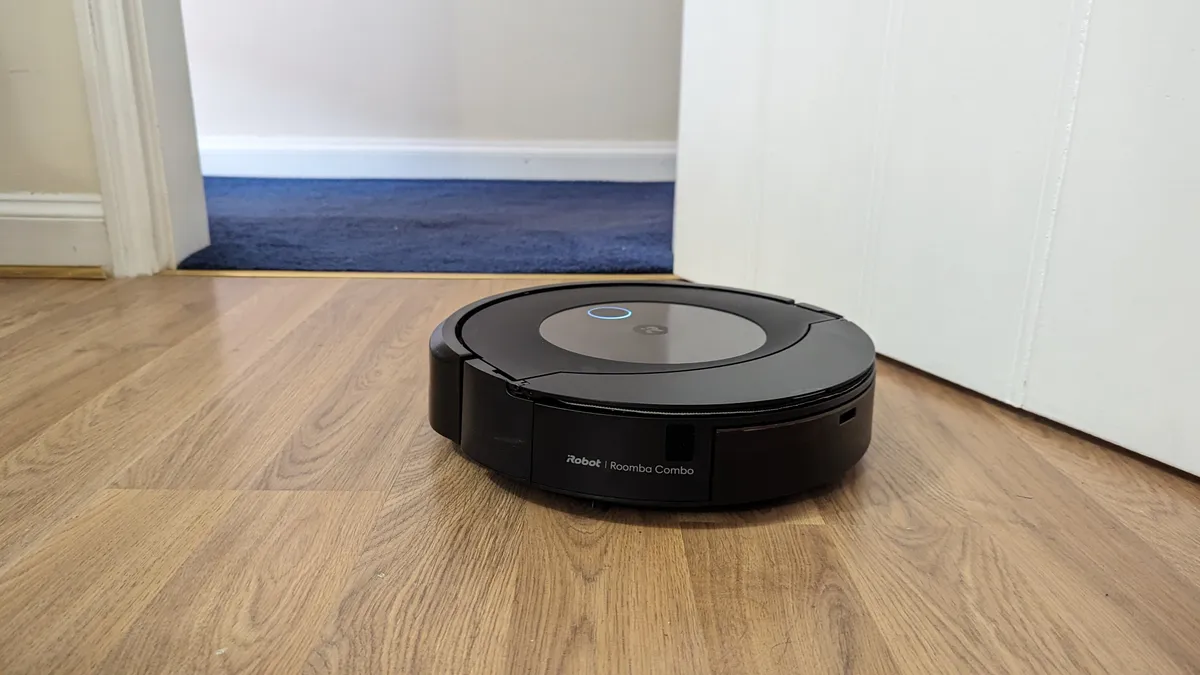
A robot vacuum deal can look loud on a sale page, then fall apart when you check stock, dock features, and the seller behind it. The Roomba Combo j9 sits in that exact spot right now: tempting, premium, and a little complicated for U.S. buyers who want cleaner floors without buying the wrong clearance unit. Best Buy’s page has shown a $394.99 clearance figure against a $1,399 comparable value, yet the same listing is marked unavailable in new condition, which means shoppers need to treat the deal as a signal, not a promise. The appeal is clear, though. This was built as a high-end vacuum and mop combo with a self-emptying robot vacuum base, an auto-fill dock, and a retracting mop pad made to keep carpet dry. If that price returns at a trusted store, it could be one of the sharper smart home buys of the season. For readers tracking U.S. shopping news and household tech, consumer product deal coverage can help frame why a deep discount is only good when the product still fits the home.
Why the Roomba Combo j9 Deal Feels Different This Time
A normal robot vacuum sale is easy to judge. You compare the old price, the new price, and maybe a few reviews. This one takes more thought because the discount is tied to a premium device that may be aging out of the main shelf while newer Roomba models take its place. That makes it less like a simple coupon and more like a clearance decision. It does not make the deal weak; it makes the buying decision more personal. A shopper in Phoenix with tile floors, two dogs, and dust at every door may see huge value. A condo owner in Chicago with one rug and no pets may be paying for power that rarely gets used.
Clearance price does not always mean easy checkout
The headline number gets attention because it sits far below what many shoppers remember from this model’s launch window. Best Buy lists the product as model c975020, with a 3.5-star customer rating from 263 reviews, and its review page shows the $394.99 clearance price while also saying the item is unavailable. That mix matters. A sale price on a page is not the same as a live cart price.
For a U.S. buyer, the safer move is to read the deal in layers. First, check whether the item is new, open-box, refurbished, or third-party. Then check whether the dock, mop pad, bags, filter, and power cord are included. A missing dock can turn a great number into an expensive headache. A missing return window can be worse.
The non-obvious part is that a sold-out clearance page can still help you. It sets a reference point. When another store asks $699 or $799 for the same model, you now know the market has already tested a much lower floor. That gives you room to wait, compare, or push toward a newer model. It also helps you spot fake urgency, which is common around smart home deals. Holiday sale pages, weekend promos, and app-only discounts can all blur together, so a known low point keeps your decision tied to the product instead of the countdown timer.
The real value lives in the dock
A cheap robot without a good base is still another chore. The dock is the reason this model drew attention in the first place. iRobot says the Clean Base can empty debris for up to 60 days and refill liquid for up to 30 days, which puts the auto-fill dock at the center of the product’s pitch.
That matters most in homes where cleaning gets skipped because setup is annoying. Think of a split-level house in Ohio with a muddy back door, a kitchen that sees breakfast crumbs every morning, and one medium-shed dog. A basic robot can run, but you still touch the bin, check the tank, and baby the mop. This model cuts some of that handling. The point is not laziness. It is friction. Most people do not quit on floor cleaning because vacuuming is hard; they quit because every small step adds up after work, dinner, homework, and pets.
Here is the catch: the base does not make the whole cleaning system self-care. Reviewers have noted that the mop pad still needs human attention after runs, and that is the difference between “hands-free” and “hands-off.” Engadget’s reviewer said the brush area needed weekly attention and the mop pad needed changing after a few runs. That one detail should shape the whole purchase. If you hate rinsing mop pads, a low price may not fix the part you dislike.
What the Robot Mop Actually Solves at Home
The best case for this machine is not that it replaces every cleaning tool. It will not. The better case is that it lowers the amount of grit, pet hair, dust, and dried-on kitchen mess that builds up between weekend cleaning. That kind of value is quiet. You notice it when socks stay clean longer and the kitchen floor does not crunch after dinner. That sounds small until you live with it. Daily floor mess has a way of making a home feel neglected even when the counters are clear. A robot that keeps that baseline under control can change the mood of a room.
Mixed flooring is where the design earns its price
Many American homes are not clean test labs. They are awkward mixes of vinyl plank, tile, low-pile carpet, area rugs, pet beds, and chair legs. A vacuum and mop combo has to move through all of that without dragging a wet pad over the living room rug.
The j9 Plus design tries to answer that with a mop that lifts away from carpet rather than only raising a pad a tiny amount. Tom’s Guide described the retractable mop as folding over the top of the robot, which helps avoid wetting carpet, while also calling out that the pad still needs manual cleaning after jobs. That is a fair trade if your home has both hardwood and carpet.
A real example: a family in suburban Dallas may have tile through the kitchen, carpet in bedrooms, and rugs in the living room. A lower-cost mop bot may make you set no-mop zones and hope the map behaves. This design gives extra peace of mind because the wet part gets physically moved out of the way. It does not remove the need to check maps, but it lowers the chance of a wet-rug mistake. That matters in open-plan homes where one bad turn can send a wet pad from kitchen tile to a wool rug near the sofa.
Smart scrubbing helps, but it is not magic
iRobot promotes SmartScrub as a feature that moves the mop back and forth with steady pressure for deeper scrubbing. Its official product language says the motion is made for tougher spots like paw prints, spills under a kitchen table, and bathroom tile. That is the right kind of problem for a robot mop.
Still, buyers should keep their expectations grounded. A dried syrup spot under a toddler’s chair, a muddy paw trail by the back door, or fine dust on tile are good targets. A greasy spill that sat overnight is a job for a human hand, hot water, and a proper cleaner. The robot is at its best before a mess turns stubborn.
The quiet insight here is that robot mopping is less about stain removal and more about timing. If the device runs often, mess never gets a long head start. That is where a premium vacuum and mop combo can feel better than its spec sheet suggests. It turns cleaning from a rescue mission into light daily upkeep. For more planning around smart cleaning habits, pair this with a robot vacuum buying guide before you compare prices.
Where the Deal Can Go Wrong
Deep discounts make people rush. That is the danger. A robot that once sat near the top of a brand’s range can still be the wrong buy if you ignore support, stock, parts, or newer models that solve old pain points. A cheaper premium machine is still a machine with bags, pads, rollers, firmware, and a dock that has to behave. A low price lowers risk, but it does not erase it. The right question is not “How much did I save?” The better question is “What will I still have to manage after it arrives?”
Newer models may fix the pain points
Roomba’s current product pages now highlight newer machines such as the Plus 405 Combo, Plus 505 Combo, and Max models with AutoWash-style docks. The official iRobot site also shows a newer product lineup ahead of older j9 Plus pages in its current navigation. That is a hint about where the company wants buyers to look next.
The older model still has strong reasons to exist. Its obstacle avoidance, carpet-safe mop movement, and dirt-focused cleaning logic make sense for many homes. Yet a newer unit with mop washing may be easier for a busy household that does not want to remove a dirty pad after cleaning. That is not a minor feature if the robot runs three or four times each week. A pad that sits damp too long can make a clean floor feel stale, so maintenance is not a side note.
This is where the comparison should be practical, not emotional. Paying less for a self-emptying robot vacuum with an auto-fill dock can be smart if you accept pad maintenance. Paying more for a newer system can be smarter if dirty mop pads are the one task you know you will avoid. The “better” choice depends on the chore you are trying to remove, not the feature list that looks longer.
Open-box and third-party units need extra checks
The deeper the discount, the more you should slow down at checkout. Some deals are store clearance. Some are marketplace listings. Some are used units with missing parts. Those are not the same thing. A photo of a robot and a dock is not proof that the correct base is in the box.
Before buying, check four items: the exact model number, dock type, return window, and accessory list. The model number c975020 is tied to the self-emptying and auto-fill version in U.S. retail listings, so it is worth matching that number against the product page. A listing that only says “j9” or “Combo” can mean a different bundle.
One odd but useful detail: replacement bags, filters, and mop pads are part of the long-term cost. A robot bought for less can still annoy you if supplies are hard to find or overpriced. The cheapest checkout is not always the cheapest year of ownership. Before buying, scan smart home cleaning deals and compare the cost of supplies, not only the robot.
Who Should Buy It and Who Should Skip It
This is not a universal recommendation. The price can be attractive, but the right buyer has a home where the features will be used often. Otherwise, the dock becomes furniture, the map stays half-trained, and the mop pad dries on the robot after one exciting week. Smart cleaning products fail when they ask owners to build a habit they never wanted. That happens more than people admit. The better match is a household that already feels floor mess every day and wants the robot to take the first pass, not perform miracles.
Pet owners and busy families get the clearest win
The strongest fit is a home with steady floor mess. Pet hair, dry cereal, tracked-in dust, and kitchen crumbs give the robot enough work to matter. Tom’s Guide found the model cleaned carpet and hard floors well, avoided obstacles, and handled pet hair on carpet better than many robots, while still noting weaker hard-floor pet hair collection. That kind of mixed result is useful because it sounds like a real home, not a lab fantasy.
For a family in New Jersey with one golden retriever, two school-age kids, and light carpet upstairs, the value is not only cleaner floors. It is fewer “we need to vacuum before guests come” moments. The robot takes care of the boring baseline so the big clean feels less heavy. It can also keep hallways and kitchen edges from becoming the places where fur gathers first.
A self-emptying robot vacuum also helps people who hate dust-bin contact. It does not remove every bit of maintenance, but it changes the rhythm. Instead of bending down after every run, you deal with the dock and pads on a slower schedule. That rhythm is why this type of product can work in a busy home even when it is not perfect.
Apartment renters may not need this much machine
A renter in a 700-square-foot apartment should be careful. If the space is mostly hard floor, has few rooms, and no pets, a cheaper robot mop may do enough. The premium features shine when the home creates daily mess across different zones.
There is also the footprint. The dock is part of the appeal, but it needs a place to live. In a narrow apartment hallway or a small kitchen corner, that base can feel bulky. The convenience has to earn its square footage. Noise matters too, since self-emptying docks can sound harsh in a small unit. If the dock sits ten feet from your couch, each emptying cycle may feel less like help and more like an interruption.
The counterintuitive advice: a higher-end robot can be less useful in a simpler home. If you already do a five-minute sweep each night, this deal may be more fun than necessary. The better move may be to save the money for a cordless stick vacuum, a basic mop, or a smaller robot that does one job well. A discount should not talk you into buying a larger routine than your home needs.
Conclusion
A sharp robot vacuum deal should make you pause, not panic. The best way to judge this one is to separate the machine from the noise around the sale price. It has the right bones for a busy U.S. home: carpet-aware mopping, smart room cleaning, a strong dock system, and enough automation to keep daily mess from building up. That is why the Roomba Combo j9 still deserves attention when it appears near clearance pricing. The weak spots are not hidden either: mop pad care, stock questions, open-box risk, and newer Roomba models with fresher dock features. The smartest buyer will check the seller, the model number, the return window, and the included parts before clicking buy. If all of that lines up, this robot mop could be a rare case where an older premium device makes more sense than a newer midrange one. Watch the price, but buy the fit.
Frequently Asked Questions
How much should I pay for the j9 Plus robot mop on sale?
A strong sale price is anything far below its old premium range, but the condition matters more than the number. A new unit from a trusted retailer is worth more than a cheaper used listing with missing dock parts or a short return window.
Is the j9 Plus worth it for pet hair?
It can be worth it for homes with dogs or cats, mainly because it runs often and empties itself. Carpet pet hair is one of its stronger use cases, though hard-floor hair clumps may still need spot attention from a regular vacuum.
Does the auto-fill dock wash the mop pad?
No, the dock can refill the robot’s liquid supply and empty debris, but it does not fully remove mop-pad chores. You should expect to remove, rinse, and replace pads so the robot is not dragging old dirt across clean floors.
Will this robot mop work on carpet and hardwood?
Yes, that mixed-floor setup is one of the main reasons to consider it. The mop system is designed to move away from carpet, which helps protect rugs and carpeted rooms while still allowing wet cleaning on tile, vinyl, or hardwood.
What should I check before buying an open-box unit?
Confirm the exact model number, dock type, power cord, bags, filter, mop pads, return policy, and warranty coverage. A missing auto-fill dock changes the whole value of the purchase, so do not rely on the product title alone.
Is a newer Roomba combo better than this discounted model?
A newer model may be better if it includes mop washing or a smaller, easier dock. This discounted model can still win on value when the price drops low enough and you are comfortable handling mop-pad cleaning yourself.
Can this replace a regular vacuum?
It can replace many light daily vacuuming runs, but it should not be your only cleaning tool. Stairs, couch cushions, tight corners, thick rug edges, and larger spills still call for a stick vacuum, upright vacuum, or manual mop.
Who should skip this deal?
Skip it if your home is small, has little floor mess, or lacks space for the dock. A lower-cost robot or simple cordless vacuum may serve you better if you do not need self-emptying, liquid refill support, and mixed-floor mopping.