
A child can learn more from ten calm minutes with an engaged adult than from an hour of rushed worksheets. That truth gets lost in American homes and classrooms where everyone feels pressure to make kids read sooner, count faster, and “get ahead” before kindergarten even begins. The best Early Learning Tips are not about turning childhood into a race. They are about building attention, language, curiosity, confidence, and trust before school demands start piling up. Parents, teachers, and caregivers need advice that fits real life: busy mornings, tired afternoons, mixed family schedules, and children who do not all grow at the same pace. Helpful guidance should feel practical, not performative. A resource hub such as trusted education and lifestyle guidance can support families looking for clear information, but the strongest learning still happens in ordinary moments at home, preschool, the library, the grocery store, and the kitchen table. Early growth works best when adults stop asking, “How do I make this child perform?” and start asking, “How do I help this child want to learn again tomorrow?”
Build a Learning Environment That Feels Safe Before It Feels Academic
Children learn faster when their nervous system is not busy defending itself. That may sound like a soft idea, but it is hard reality in American classrooms and homes alike. A young child who feels watched, rushed, or corrected at every turn will not take the small risks that learning requires. A safer environment does not mean a silent room with perfect supplies. It means the child knows mistakes will not become shame, questions will not be brushed aside, and effort matters more than speed.
Why Preschool Readiness Starts With Calm Routines
Preschool readiness often gets reduced to alphabet recognition, counting, and sitting still, but those are only the visible pieces. A child who can predict what happens next has more mental space for language, play, and problem-solving. Morning songs, cleanup rituals, bedtime reading, and goodbye routines give the day a shape that young children can hold in their minds.
American families often struggle here because schedules are chopped into work shifts, commutes, sibling activities, and screen-filled gaps. A parent may not control every hour of the day, but a few repeatable anchors can do more than a full shelf of learning toys. The child who knows that breakfast comes before shoes, shoes come before the bus, and a hug comes before separation starts the day with fewer battles.
Routines also teach time without needing a clock. When a child says, “After snack, we read,” that child is practicing sequence, memory, and self-control. Those are school skills hiding inside family life. The trick is to make routines firm enough to trust and flexible enough to survive spilled cereal, lost mittens, and Monday moods.
How Classroom Confidence Grows From Emotional Safety
Classroom confidence does not begin when a child answers correctly. It begins when the child feels safe enough to try while being unsure. In a preschool circle, that might look like raising a hand, naming a color, joining a song, or asking for help with a zipper. These small acts matter because they train children to participate instead of disappear.
A child who hears “try again” in a kind voice learns that errors are part of the room. A child who hears sighs, sarcasm, or public correction learns to stay quiet. Adults sometimes think they are teaching discipline when they are teaching fear. There is a difference, and children feel it before they can explain it.
Real confidence grows when adults narrate effort with care. “You kept working on that puzzle,” lands better than “You’re so smart.” The first sentence gives the child a path to repeat. The second gives the child an image to protect. Learning becomes less fragile when children know they can struggle and still belong.
Early Learning Tips That Turn Everyday Moments Into Practice
The strongest teaching often hides inside ordinary American family life. A grocery trip, a laundry basket, a walk past a fire station, or a conversation in the car can carry more meaning than a packaged activity. Early Learning Tips work best when they turn daily moments into small lessons without making every moment feel like school. Children need practice, but they also need the freedom to be children.
Using Reading Habits Without Making Books Feel Like Homework
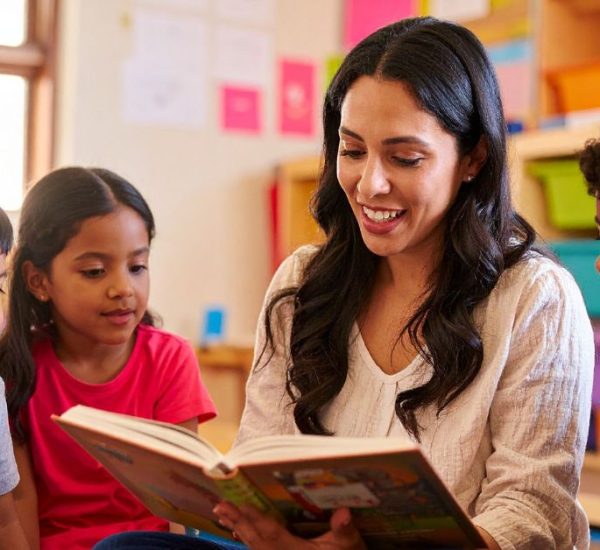
Reading habits start long before a child can read words alone. They begin when a baby hears rhythm, when a toddler turns thick pages, when a preschooler points to a dog in a picture, and when an adult laughs at the same silly line for the fourth night in a row. Those moments teach children that books are not tests. Books are places where voices, pictures, and feelings meet.
Parents sometimes worry when a child wants the same book every night. That repetition is not a problem. It is memory work, language practice, prediction, and comfort all at once. The child who knows the next line is not being lazy. That child is rehearsing structure and sound with the seriousness of a musician practicing a familiar song.
A strong home reading habit does not require a huge library. A weekly library visit, a basket of used books, or a bedtime story from a phone-free adult can change the emotional weight of reading. The goal is not to rush decoding. The goal is to make books feel like a normal part of being cared for.
Turning Play-Based Learning Into Real Skill Building
Play-based learning can look messy from the outside, which is why some adults underestimate it. A child building a block tower is testing balance, shape, patience, and cause and effect. A child pretending to run a restaurant is practicing language, memory, turn-taking, and social rules. A child sorting buttons by color is doing early math without a worksheet in sight.
The mistake is thinking play means adults do nothing. Good play support is active, but not controlling. You might add one question, offer one new word, or place one extra challenge in the child’s path. “What happens if the bridge is longer?” does more than a lecture on engineering ever could.
Families in small apartments, busy neighborhoods, or tight budgets can still create rich play. Cardboard boxes, measuring cups, socks, spoons, paper bags, and sidewalk chalk can carry a child farther than expensive toys with batteries. The less a toy does, the more the child has to do. That is not a downgrade. That is the point.
Strengthen Language, Listening, and Thinking Before Formal Lessons
Children enter school with different vocabularies, different home routines, and different levels of adult conversation around them. That gap matters, but it should not be treated as a fixed label. Language grows through back-and-forth talk, patient listening, and chances to explain ideas. A child does not need constant instruction. A child needs adults who answer, ask, pause, and listen as if the child’s thoughts are worth hearing.
Why Early Literacy Skills Begin With Conversation
Early literacy skills are built through speech long before pencil grip and letter sounds take center stage. When a child tells you about a broken crayon, a playground argument, or a dinosaur fact, the child is practicing sequence, detail, emotion, and memory. Those same abilities later support reading comprehension and writing.
Many American parents feel pressure to buy programs, apps, and flashcards. Some tools can help, but conversation remains unmatched because it adapts in real time. A child says, “The dog runned,” and an adult replies, “Yes, the dog ran fast across the yard.” That small correction teaches grammar without turning the child into a student under review.
Listening matters as much as speaking. Children notice when adults give half-attention while scrolling or rushing through chores. A few focused minutes can stretch a child’s language more than a long distracted afternoon. Put the phone down during one story, one snack, or one car ride. The child will hear the difference.
Helping Child Development Through Better Questions
Child development moves forward when adults ask questions that invite thought instead of yes-or-no answers. “What did you notice?” opens more doors than “Was it fun?” “How did you fix it?” teaches more than “Did you finish?” A better question gives the child room to organize an answer.
Strong questions also help children learn cause and effect. After a tower falls, you might ask, “Which block made it wobble?” After a story ends, you might ask, “Why did the bear hide?” These questions do not need perfect answers. They teach children to connect events, reasons, and outcomes.
There is a hidden benefit here. When children explain their thinking, adults discover what they misunderstood. A child may know the answer but lack the words. Another child may repeat a word without grasping the idea. Better questions uncover the difference, and that difference tells you what to teach next.
Guide Independence Without Turning Learning Into Pressure
Independence is not the same as leaving children alone to figure everything out. Young learners need support that fades with care. Too much help teaches dependence, while too little help teaches frustration. The best balance sits in the middle, where adults step close enough to guide and far enough back to let the child own the effort.
Creating Preschool Readiness Through Small Responsibilities
Preschool readiness grows when children practice real responsibility in small, repeatable ways. A four-year-old can put napkins on the table, choose between two shirts, carry a backpack, match socks, or place library books near the door. These tasks build memory, planning, coordination, and pride.
Responsibility should feel useful, not symbolic. Children can sense when a job matters. A child who feeds the family dog with supervision learns that actions affect another living creature. A child who wipes a spill learns that mistakes can be repaired. Those lessons carry into classrooms where children must manage supplies, follow directions, and work near others.
Adults often step in too fast because it saves time. The shoe gets tied, the jacket gets zipped, the toy bin gets cleaned in thirty seconds. The day moves forward, but the child loses practice. Slowing down for one small task each day can teach more independence than a speech about growing up.
Keeping Play-Based Learning Strong As Expectations Rise
Play-based learning should not disappear the moment a child starts kindergarten. Academic expectations rise, but children still need hands-on exploration to make ideas stick. Counting plastic bears, acting out stories, drawing maps of the neighborhood, and building letter shapes with clay all connect the body to the mind.
Some parents worry that playful work looks less serious than paper-based work. That fear comes from adult habits, not child learning. A worksheet can show what a child already knows, but play often reveals how the child thinks. When a child uses blocks to show five plus two, the adult can see the math forming.
Pressure grows fast in the early school years, especially when families compare milestones. One child reads at five. Another reads at six and a half. One child writes neat letters. Another tells brilliant stories through messy scribbles. Progress matters, but panic rarely helps. Children need steady adults, not anxious scorekeepers.
Protect Curiosity in a Screen-Heavy, Test-Aware Culture
Modern childhood is loud. Screens flash, schedules fill, school benchmarks arrive early, and parents hear a steady drumbeat of advice about what children should know by each age. Curiosity can survive that noise, but only when adults defend it with intention. The goal is not to reject modern tools. The goal is to keep the child’s own thinking from being crowded out.
Building Classroom Confidence Without Overpraising
Classroom confidence can weaken when adults praise every tiny action with the same bright tone. Children are smart enough to hear when praise becomes background noise. They do not need applause for breathing near a crayon. They need honest recognition tied to effort, choice, and growth.
A better response sounds specific. “You changed your plan when the first tower fell,” teaches resilience. “You listened while Maya was talking,” teaches social awareness. “You used the picture to help tell the story,” teaches strategy. Specific words give children a map.
Overpraise can also make children afraid to disappoint adults. A child who is always called gifted may avoid hard work because hard work threatens the label. Confidence built on process holds up better. It tells the child, “You can meet hard things with tools,” which is far stronger than, “You must always look impressive.”
Choosing Reading Habits Over Passive Screen Time
Reading habits need protection because screens ask so little from a child compared with books, conversation, and imaginative play. A show moves the story forward whether the child thinks or not. A book waits. It makes the child look, listen, predict, remember, and ask.
This does not mean every screen is harmful or every book moment is magical. A tired parent may need twenty minutes to cook dinner, answer a message, or breathe. Guilt helps no one. The better question is whether screens are taking over the spaces where language, movement, and human connection should live.
A simple family rule can help: pair screen limits with replacement rituals. After dinner, one short show can lead into bath and a story. Saturday cartoons can end with a library trip or backyard play. Children handle boundaries better when they know what comes next. Empty restriction creates battles; replacement creates rhythm.
The strongest learning foundation is not built through pressure, expensive materials, or a race toward adult-approved milestones. It grows through steady attention, rich talk, useful responsibility, playful practice, and a home or classroom where mistakes do not turn into shame. Parents and teachers in the United States face noise from every direction, but the child in front of them needs something simpler and harder: presence with purpose. Early Learning Tips matter most when they help adults notice the learning already available in daily life. You do not need to turn your living room into a mini school or measure every moment against a checklist. Choose one repeatable habit this week: read after dinner, ask better questions in the car, give your child one real responsibility, or protect a block of open play. Small patterns become childhood memories, and childhood memories become the ground children stand on when school gets hard.
Frequently Asked Questions
What are the best early learning activities for preschool children?
Hands-on activities work best: reading aloud, sorting objects, building with blocks, pretend play, singing, counting household items, and drawing stories. These activities build language, attention, memory, and problem-solving without making learning feel like a test.
How can parents support preschool readiness at home?
Create steady routines, read daily, give simple responsibilities, and practice listening skills through conversation. Children prepare for preschool through emotional security, independence, language exposure, and chances to follow directions in calm everyday settings.
Why is play-based learning important for young children?
Play gives children a natural way to test ideas, solve problems, use language, and manage social situations. Building, pretending, sorting, and exploring all support thinking skills that later connect to reading, math, and classroom participation.
How do reading habits help early literacy skills?
Regular reading builds vocabulary, listening stamina, memory, story sense, and sound awareness. Children who hear books often learn how language works before they begin reading words on their own, which makes later literacy feel more familiar.
What helps build classroom confidence in kindergarten?
Kindergarten confidence grows when children practice speaking, asking for help, taking turns, handling mistakes, and completing small tasks. Encouragement should focus on effort and strategy so children learn that trying matters more than looking perfect.
How much screen time is healthy for young students?
Screen time should not replace sleep, movement, reading, conversation, outdoor play, or family routines. Short, age-appropriate viewing can fit into the day, but young children need far more active play and human interaction than passive entertainment.
What are simple child development signs parents should watch?
Look for growing language, curiosity, emotional recovery after frustration, pretend play, motor coordination, and interest in other children. Development varies, but steady growth across communication, movement, social behavior, and problem-solving usually tells a stronger story than one isolated milestone.
How can busy parents make learning part of daily life?
Use moments you already have. Count apples at the store, talk during car rides, read one book before bed, let your child help with laundry, and ask what they noticed outside. Small daily habits beat occasional big learning sessions.