
A saw that starts cleanly changes how a homeowner thinks about storm cleanup. The 56V Chainsaw has become the kind of tool many Americans notice after one rough weekend with fallen limbs, old gas, and a pull cord that refuses to cooperate. The appeal is not only power. It is the feeling that yard work can begin when you are ready, not after a small engine mood swing. For homeowners comparing outdoor gear through home and yard product coverage, EGO’s rise makes sense because the brand has turned battery sharing into a real buying reason, not a side perk.
That matters in suburbs from Ohio to North Carolina, where most chainsaw jobs are not logging jobs. They are maple branches across a driveway, pine limbs after wind, or a half-dead tree that needs careful sectioning. Gas still has a place for long firewood days and large timber. But for the person who cuts in short bursts, a battery powered chainsaw can feel less like a compromise and more like the smarter tool for the work that actually happens.
Why American Homeowners Are Moving Away From Gas
The old gas saw had one clear advantage: it was familiar. You knew the noise, the smell, the choke dance, and the little ritual of hoping the fuel mix had not sat too long. For years, that felt like the price of having enough bite. Now the friction around gas is easier to see because battery tools have removed enough of it.
Most people do not cut wood all afternoon. They cut for 15 minutes, drag branches, talk to a neighbor, move a truck, sharpen a chain, or wait for someone to clear the drop zone. That stop-and-start pattern is where a cordless chainsaw makes sense. It waits without idling. It restarts without drama. It does not make the whole block sound like a tree crew showed up at breakfast.
There is also a pride shift happening. For a long time, gas tools felt like proof that you took yard work seriously. Now many homeowners see less maintenance as a sign of better judgment. Nobody gets extra credit for fighting a carburetor when a limb is blocking the driveway.
The real fight is not power, it is readiness
A gas chainsaw alternative wins when the first cut happens faster. That sounds small until a storm drops a limb across a fence at 7 p.m. You are already tired. The last thing you want is stale fuel, a flooded carb, or a saw that needs ten pulls before it wakes up.
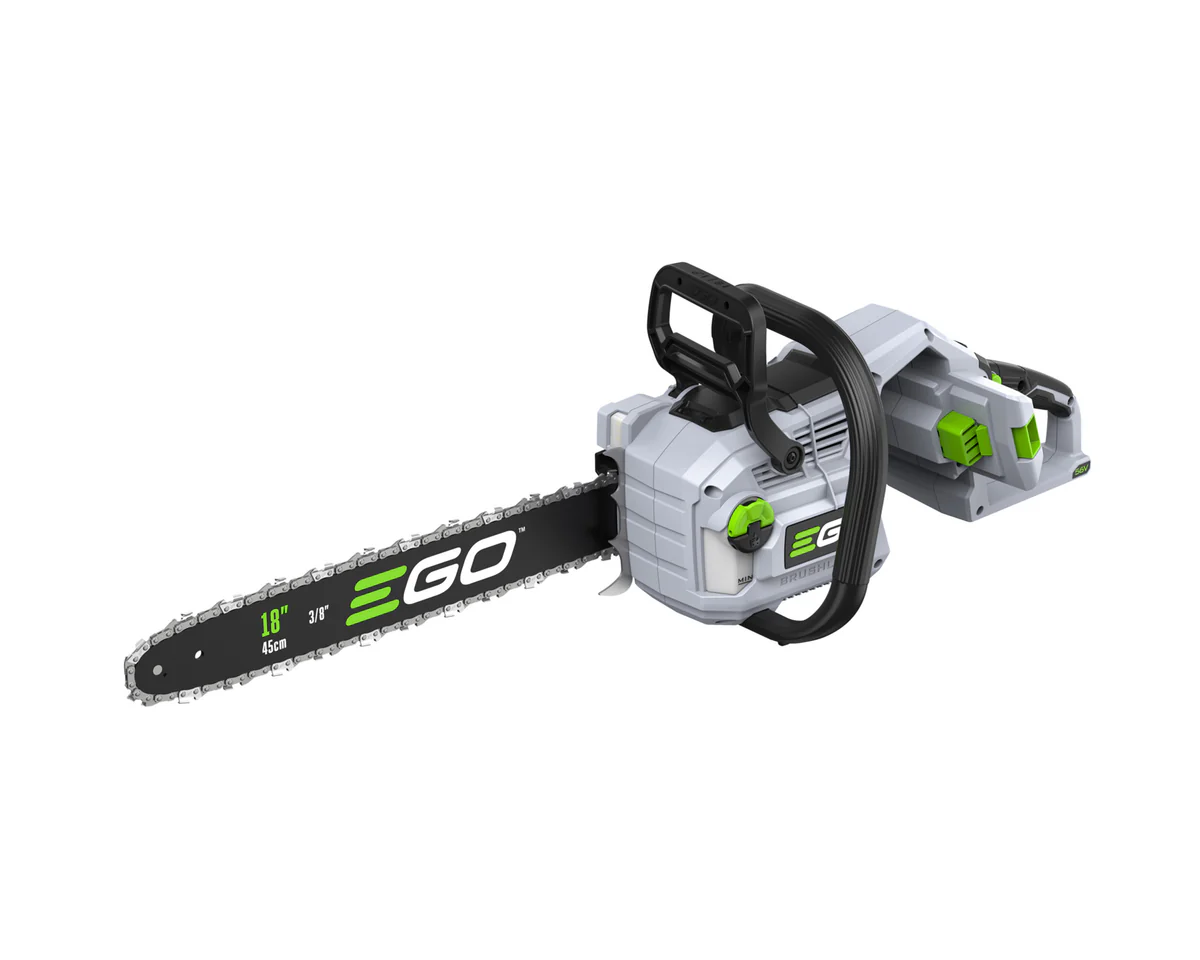
That is where EGO has found its lane. Its 18-inch model is listed by EGO as a 50cc gas-equivalent saw with up to 330 cuts on 4×4 lumber using the included 6.0Ah battery, while the 20-inch model is rated as a 55cc gas-equivalent saw with up to 135 cuts on 6×6 material and chain speed up to 25 m/s. Those specs do not make every gas saw obsolete, but they do shrink the number of homeowner jobs where gas feels needed.
The non-obvious part is that many owners do not need a saw that can run longest. They need a saw that is ready most often. A battery pack kept charged in the garage beats a gas can that has turned questionable by spring. For the average yard, readiness can be worth more than raw endurance.
That point hits hardest for seasonal users. A Florida homeowner cleaning palm debris after a storm, or a Pennsylvania homeowner cutting one fallen branch after winter ice, may go months between jobs. A tool that sleeps well matters when the work arrives without warning.
Noise changes how often people use the tool
Gas saw noise is not a side issue. It affects when you cut, how long you can work near family, and whether you feel rude firing it up on a quiet Saturday morning. A cordless chainsaw still makes chain and motor noise, but it drops the sharp engine blast that makes people look over the fence.
That changes behavior. A homeowner may trim one branch before dinner instead of saving every cut for a long weekend project. A small property owner may clean storm debris in stages rather than waiting until the whole mess feels worth dragging out a gas saw. Less noise often means less delay.
That delay matters. A hanging branch left too long can damage siding, block a walkway, or keep a yard unsafe for kids. The quieter tool does not make the job harmless, but it lowers the social friction around doing the job sooner.
The other gain is communication. Two people clearing branches can talk without shouting over an idling engine. That may sound like comfort, but it can also prevent mistakes when one person is holding brush and the other is lining up the cut.
Where the 56V Chainsaw Earns Its Reputation
The reason EGO gets attention is not only that it built one strong saw. It built a battery system around yard work. That is the shift many shoppers miss when they compare saw to saw. A chainsaw bought alone is one purchase. A saw bought into a platform can affect your mower, blower, trimmer, and future tools.
For American homeowners, that platform effect matters. A 56V battery sitting on a shelf is easier to justify when it also runs the blower after you finish cutting limbs. The saw becomes part of a garage system. That is why EGO can pull buyers away from gas even when a gas saw still looks tough on paper.
This is where the brand’s best argument is practical, not flashy. The garage is already crowded. Anything that removes a fuel can, a separate charger, or a second maintenance routine has real value. The saw wins space before it ever touches wood.
Battery sharing makes the price feel different
The sticker price of a battery powered chainsaw can look high when you stare at the kit. Battery packs are not cheap. But the math changes once the same packs serve more than one tool. A homeowner who already owns an EGO mower or blower is not buying a full new fuel system. They are adding another tool to a power setup they already trust.
That is a different kind of value. It is not the cheapest path for every buyer, but it reduces waste inside the garage. One charger. Fewer fuel cans. Fewer small-engine headaches. One battery family that turns several tools into a connected set.
There is a catch, and buyers should respect it. Runtime depends on the battery size, chain sharpness, wood type, and how hard you push the saw. Cutting dry oak is not the same as trimming green pine. The smart owner buys for the worst job they expect, not the cleanest demo cut.
The best move is to think in jobs, not volts. If your hardest task is pruning crepe myrtle and cutting fallen branches, a smaller bar and modest pack may fit. If you own wooded acreage in Tennessee or Oregon, a larger pack and longer bar make more sense.
The best use case is storm cleanup, not lumberjack fantasy
A cordless chainsaw shines during broken-limb cleanup because the work is uneven. You cut, move, stack, and cut again. That rhythm gives the battery and the person time to breathe. It also avoids one of the worst gas saw habits: leaving the engine running while you reposition because restarting is annoying.
Think about a typical Midwestern storm scene. A silver maple limb drops across the driveway. You make several cuts through branches, haul them to the curb, then come back for larger sections. The saw is not cutting nonstop for two hours. It is working in bursts, which fits battery power well.
The counterintuitive lesson is that gas can be less convenient in light real work, even when it has more total endurance. If you cut five times, move debris for ten minutes, then cut again, instant restart beats fuel runtime. The tool that matches the work pattern feels stronger than its spec sheet suggests.
It also changes who feels able to help. A smaller adult who hates yanking a pull cord may be more willing to clear branches when the saw starts with a trigger and has less vibration. That does not make the job casual. It makes the tool less hostile.
What It Still Cannot Replace For Serious Cutting
The EGO story gets overhyped when people act like gas is dead. It is not. A rancher cutting large hardwood rounds all afternoon has different needs than a homeowner trimming storm damage. The better view is more honest: battery saws have moved far enough up the ladder that many gas saws now feel unnecessary for common residential jobs.
Recent tool testing reflects that split. Popular Mechanics named the EGO CS2005 Power+ 56V 20-inch model its heavy-duty pick among electric chainsaws, while TechGearLab’s 2026 chainsaw testing praised the EGO Power+ CS1815 for power, control, and value among the models it tested. Those are strong signs of market respect, not proof that one saw wins every job.
A fair buyer keeps two truths in the same hand. Battery saws have become good enough for more work than skeptics admit. Gas saws still make sense when the job is larger, longer, hotter, and farther from a charger.
Big wood still exposes battery limits
Large-diameter hardwood asks more from any saw. The chain stays buried longer. Heat builds. Batteries drain faster. The user also has less room for sloppy technique because a wider log can pinch the bar or shift under load.
That is where gas still earns its keep. If you process cords of firewood every season, a high-output gas saw and extra fuel can keep work moving in a way battery packs may not. You can rotate batteries, yes, but you are still managing charge, heat, and downtime. For long cutting sessions, those details pile up.
A smart buyer does not turn this into a tribe war. The right question is not “battery or gas?” It is “what work do I do most?” A homeowner with three maples and a small shed does not need the same saw as someone clearing acreage after a windstorm.
There is another limit that rarely shows up in product photos: patience. If you are bucking a big fallen oak into stove lengths, waiting on packs can sour the day. For that owner, gas may still be the more honest tool.
Chain care matters more than motor type
Many shoppers obsess over motor power and ignore the chain. That is backward. A dull chain makes any saw feel weak. It drains batteries, overheats motors, burns wood, and increases the chance of forcing the cut.
This is where EGO owners can make a battery saw look better or worse than it is. Keep bar oil filled. Check tension before cutting. Touch up the chain after dirty wood. Avoid hitting soil, nails, stones, or hidden wire in old fence lines. One careless ground strike can turn a sharp saw into a slow one.
The quiet truth is simple. A sharp chain on a midrange saw often beats a dull chain on a stronger one. That applies to gas, battery, and corded models. Power gets attention, but maintenance decides the cut.
A good habit is to watch the chips. Big, clean chips usually mean the chain is cutting. Fine dust means the chain is scraping. When dust shows up, stop and sharpen before blaming the battery.
Safety, Storage, And The Smarter Buying Decision
The lighter feel and instant start of battery tools can create a false sense of comfort. That is dangerous. A chainsaw is still a chainsaw. The chain does not care whether power comes from gasoline or lithium cells.
OSHA’s chainsaw safety guidance says operators should keep both hands on the handles, maintain secure footing, avoid cutting overhead, and use proper protective gear. That advice fits backyard cleanup as much as jobsite work, because most injuries do not wait for a professional setting.
The best buying decision is not only about the saw. It is about the kit around it. Chaps, eye protection, gloves, bar oil, wedges, a file, and a safe work plan should be part of the same purchase.
The easier saw can tempt bad habits
Battery start is convenient, but it can make a saw feel too casual. You press a trigger, and the chain is alive. No pull cord. No engine warmup. No smoke. That ease is useful, yet it can soften the mental warning that should come before every cut.
Wear chaps, eye protection, gloves, hearing protection, and boots with grip. Clear your footing before the cut. Plan where the limb will fall. Do not cut above shoulder height. Do not stand under loaded branches that may spring, twist, or drop when the kerf opens.
A good example is a bent branch after an ice storm. It may look small, but stored tension can snap wood back toward you. Battery power does not remove that risk. It only removes engine fuss.
The safest users build a pause into the process. Battery out when adjusting. Chain brake on when moving. Saw set down before clearing loose brush. Those small habits matter more than brand loyalty.
The storage advantage is bigger than people expect
Storage may be the least flashy reason EGO is winning attention. A gas saw stored poorly can sour the next job before it starts. Fuel goes stale. Lines gum up. The garage smells. The saw becomes one more small engine that needs care before it can help.
A battery saw changes that routine. You still need bar oil, chain care, and safe storage, but you remove fuel mixing and carb trouble from the list. For many homeowners, that is the difference between owning a chainsaw and using one without dread.
For anyone building a garage kit, the buying logic is clear. Choose the bar length that fits your real wood size, pick a battery large enough for your hardest normal task, and keep safety gear beside the saw instead of buried in a bin. Also read how to choose outdoor power tools and keep a storm cleanup tool checklist ready before bad weather arrives.
Storage also shapes long-term satisfaction. A clean bar, an oiled chain, and a charged pack turn the next job into a five-minute setup. That is how a tool becomes part of the home instead of another item collecting dust.
Conclusion
The shift toward battery saws is not about replacing every gas tool in America. It is about matching the tool to the way most people cut wood at home. That is why EGO’s momentum feels earned. It gives homeowners enough power for common jobs while removing the fuel, noise, and starting problems that made saw ownership feel heavier than it needed to be.
The 56V Chainsaw belongs in that new middle ground: strong enough for serious residential cleanup, simple enough for occasional use, and tied to a battery system many people already own. Gas still has the edge for all-day firewood work, large hardwood, and remote jobs where charging is not practical. But for the driveway limb, the backyard oak branch, and the weekend property reset, the old default has changed. A better tool choice starts with honest limits, not brand pride. Buy the saw that fits your real work, keep the chain sharp, and treat safety gear as part of the tool.
Frequently Asked Questions
Is an EGO chainsaw powerful enough for storm cleanup?
Yes, for most residential storm cleanup, it has enough power for fallen limbs, branch piles, and medium logs. Match the bar length to the wood size. For larger hardwood trunks or all-day cutting, a pro-grade gas saw may still make more sense.
How long does an EGO battery last while cutting wood?
Runtime depends on battery size, chain sharpness, wood type, and cut diameter. Light limb work can stretch a battery much longer than repeated cuts through dense hardwood. Keep a second charged pack nearby when cleanup involves more than a small branch pile.
Is a battery powered chainsaw safer than a gas chainsaw?
No. It may be easier to start and quieter to run, but the chain is still dangerous. Use chaps, eye protection, gloves, sturdy boots, and safe footing. The simpler start can even tempt careless handling, so slow down before every cut.
What size EGO saw should a homeowner buy?
A 14- or 16-inch model fits pruning, small trees, and light storm cleanup. An 18-inch saw gives more room for medium logs. A 20-inch model is better for larger property work, but it also needs more battery and more control.
Can a cordless chainsaw replace gas for firewood?
It can handle some firewood cutting, especially smaller rounds and short sessions. For cords of hardwood, gas still has an edge because refueling is faster than charging. Battery saws work best when the job has breaks between cuts.
Does the EGO system work better if I already own its mower or blower?
Yes. Shared batteries make the purchase easier to justify because one pack can support several tools. That is one reason homeowners stay with the brand after the first purchase. The saw becomes part of a full yard setup.
What maintenance does an EGO chainsaw need?
Keep the chain sharp, fill the bar oil, clean chips from the sprocket cover, check chain tension, and inspect the bar. Battery tools remove fuel-mix work, but they do not remove cutting maintenance. A dull chain ruins performance fast.
Is an EGO saw a good gas chainsaw alternative for beginners?
Yes, for careful beginners doing normal yard work. The easier start and lower noise help, but training still matters. Read the manual, practice on stable wood at ground level, and avoid overhead cuts or tensioned limbs until you know what you are doing.